Preventive maintenance checklist and schedule for small teams
Copy a preventive maintenance checklist for HVAC, life safety, plumbing, grounds and vehicles, plus a PM schedule template that flags what's overdue.
A preventive maintenance checklist lists the routine tasks that keep each piece of equipment working, like changing filters and testing emergency lights, and how often each is due. A preventive maintenance schedule puts those tasks on dates. For every asset, it shows what to do, how often, when it was last done, when it’s next due and who does it.
This guide is for small property, facilities and service teams that want a checklist they can use this week and a schedule they’ll keep. It starts with ready-to-copy checklists by equipment type, then covers schedule types and a schedule template you can paste into Excel or Google Sheets.
How we researched this: checked October 2026. The frequencies below are common practice: your equipment’s manual comes first, and local codes can require more. Where a government agency or standards body gives a frequency, we link to its own page.
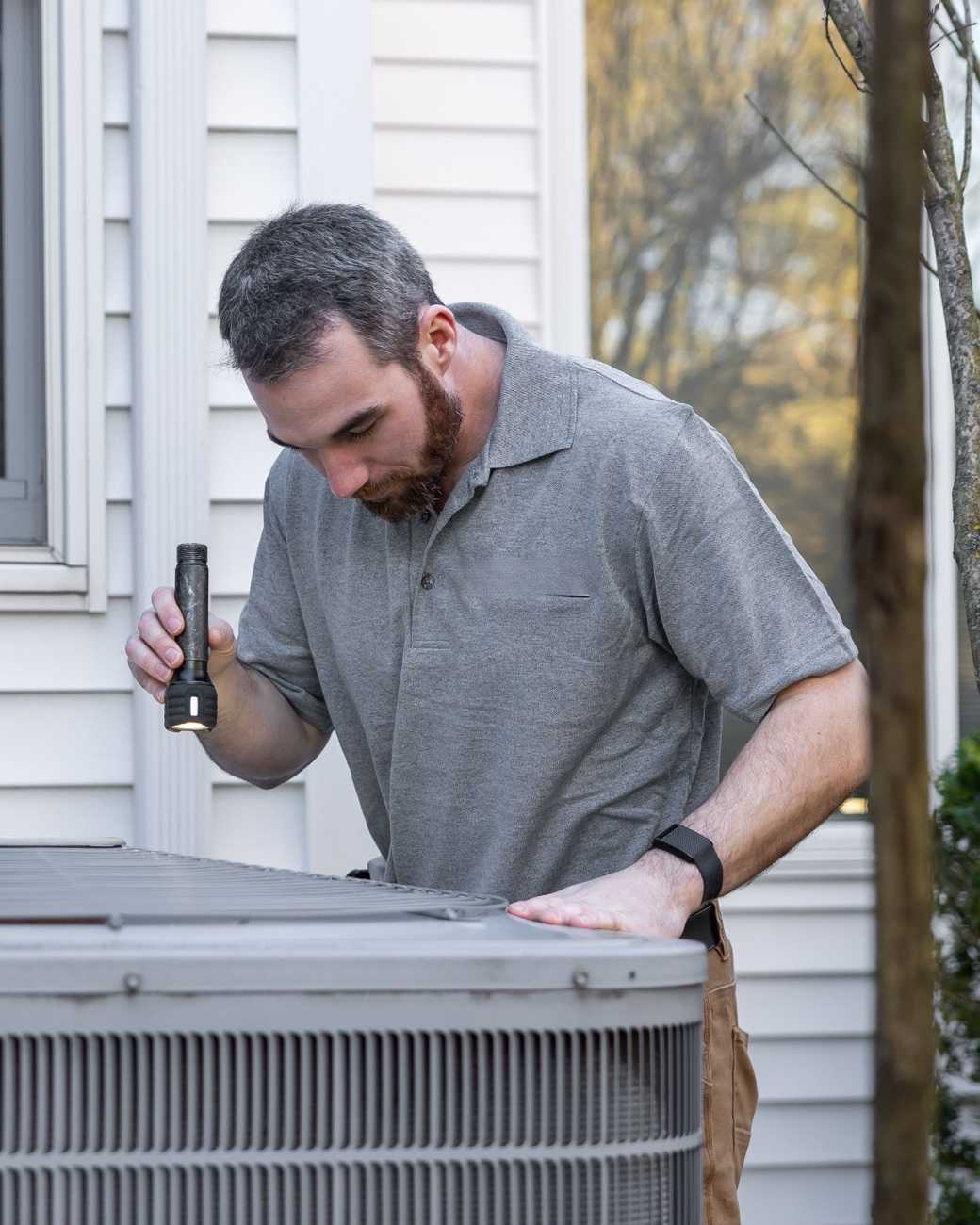
Preventive maintenance checklist examples by equipment type
Copy the lists that match your buildings, then set each frequency from the manual. A frequency is common practice unless a source is named next to it.
Heating, cooling and boilers
ENERGY STAR’s maintenance checklist, written for homes, is a good baseline for small buildings too.
| Task | How often |
|---|---|
| Inspect air filters; clean or replace dirty ones | Monthly (ENERGY STAR) |
| Keep outdoor and rooftop units clear of leaves and debris | Monthly |
| Boilers: check pressure, temperature and water level, and look for leaks | Monthly in heating season, or as the manual says |
| Boilers: test the low-water cutoff | As the manufacturer’s manual says |
| Check belts and pulleys for wear and tension | Every 3 months |
| Clear the condensate drain line and pan | Every 3 months |
| Check thermostat settings and schedules | Every 3 months, and when the seasons change |
| Cooling tune-up by a technician: coils, refrigerant level, electrical connections | Yearly, in spring (ENERGY STAR) |
| Heating tune-up by a technician: burner, heat exchanger, gas pressure | Yearly, in fall (ENERGY STAR) |
| Boiler inspection by your state’s or insurer’s inspector | On the schedule they set, with the certificate kept as they require |
Electrical and life safety
| Task | How often |
|---|---|
| Smoke and CO alarms in units and common areas: press the test button, check the replace-by date | Test as the manufacturer and your local code say |
| Test GFCI outlets, the ones with test and reset buttons near sinks and outdoors: press test, then reset | Monthly, and after a power failure (CPSC) |
| Fire extinguishers: visual check of the gauge, pin, seal and access | Monthly (OSHA) |
| Fire extinguishers: maintenance check, with the date recorded | Yearly (OSHA) |
| Emergency lights: run them on battery for at least 30 seconds, usually with the test button | Monthly (NFPA) |
| Emergency lights: run them on battery for at least 90 minutes | Yearly (NFPA) |
| Electrical panels: clear access, readable labels, no heat or burning smell | Every 3 months |
| Fire alarm, sprinklers and backup generator, usually by a licensed contractor | On the schedule your local fire code sets |
CPSC’s GFCI fact sheet is written for homes; the same test works on any GFCI outlet. OSHA’s extinguisher checks come from its general industry rule for the portable extinguishers an employer provides; construction sites follow a different OSHA rule.
The emergency light tests come from the Life Safety Code of the National Fire Protection Association (NFPA), which your local fire code may adopt. Lights that test themselves need a look every 30 days instead, for damage or warning lights.
Plumbing and water heaters
| Task | How often |
|---|---|
| Look for leaks under sinks, around toilets and water heaters, and in mechanical rooms | Monthly |
| Run water in unused sinks and pour water into floor drains so the traps don’t dry out | Monthly |
| Test the sump pump by filling the pit until the pump starts | Every 3 months, and before the wet season |
| Turn the main and fixture shutoff valves so they don’t seize | Yearly |
| Drain or flush the water heater to clear sediment | Yearly, or as the manual says |
| Test the water heater’s temperature and pressure relief valve | As the manual says |
| Backflow preventer test by a certified tester | On the schedule your water utility sets |
Building, common areas and grounds
| Task | How often |
|---|---|
| Walk the site: trip hazards, potholes, broken lights, damaged signs | Monthly |
| Exterior and common-area lights and timers | Monthly, and when the clocks change |
| Laundry rooms: clean the dryer exhaust ducts and vents | As the dryer manual says, more often with heavy use |
| Doors, locks, closers and overhead doors: check and lubricate | Every 3 months |
| Roof: look for damage, clear debris, check flashing and roof drains | Twice a year, spring and fall, and after big storms |
| Gutters and downspouts: clean them and check they drain away from the building | Twice a year, more often under trees |
| Caulking and seals around windows and doors | Yearly |
| Irrigation: start it up in spring and drain it before the first freeze | Twice a year |
One task across many units
With dozens or hundreds of apartments, don’t make a line for every unit. Make one job per building per round, such as “Building A, units 101 to 124: change furnace filters”, and list the units in its checklist so the technician ticks off each one. Give tenants the notice your leases and local law require, and carry any unit you couldn’t enter to the next visit.
Vehicles and trucks
| Task | How often |
|---|---|
| Walk-around: lights, tires, mirrors, wipers, leaks under the vehicle | Before each trip, or daily |
| Tire pressure and tread, including the spare, with the tires cold | Monthly (NHTSA) |
| Fluid levels: oil, coolant, brake and washer fluid | Weekly |
| Oil and filter change | At the miles or months in the owner’s manual |
| Tire rotation | At the interval in the owner’s manual (NHTSA) |
| Brakes, belts, hoses and battery | At each oil change |
| Safety kit: fire extinguisher, first aid kit, warning triangles | Monthly |
| Periodic inspection of trucks and trailers that are commercial motor vehicles | At least every 12 months (49 CFR 396.17) |
Federal rules count a vehicle used on highways in interstate commerce as a commercial motor vehicle when it’s rated or weighs 10,001 lb or more, counting a pickup and its trailer together, or carries certain numbers of passengers or placarded hazardous materials (49 CFR 390.5). Owner’s manuals usually set oil changes and tire rotations by miles as well as months, so vehicles need a mileage column. Record each service’s date, mileage and cost in an equipment maintenance log, which also lists the records federal rules require for commercial vehicles.
A year of preventive maintenance at a glance
Put together for one small building and its vehicles, a year of PM looks like this:
The same year by frequency, to print and pin up:
- Every week or trip: vehicle walk-around and fluid levels.
- Every month: air filters, outdoor units, boiler check in heating season, tire pressure and tread, leak check, floor drains, GFCI outlets, fire extinguisher check, 30-second emergency light test, site walk, exterior lights, vehicle safety kits.
- Every 3 months: belts, condensate drains, thermostats, sump pump, electrical panels, doors and locks.
- Twice a year: roof, gutters, irrigation.
- Every year: cooling and heating tune-ups, water heater flush, shutoff valves, fire extinguisher maintenance, 90-minute emergency light test, truck inspection, caulking.
- When the manual, your code or your inspector says: smoke and CO alarms, boiler low-water cutoff and inspection, dryer vents, relief valve, backflow test, fire alarm, sprinklers and generator.
What should a preventive maintenance checklist include?
A good checklist is specific enough that someone new can follow it without asking. For each asset, include:
- The asset and where it is, with make, model and serial number, so the technician brings the right parts.
- Steps in order that can each be checked off: “Replace 4 filters, 20x25x2”, not “Service the HVAC”.
- Readings to record with their normal range from the manual, such as pressure or temperature.
- Parts, tools and safety steps, such as locking out the power before opening a unit.
- How often, who, and a sign-off with the date, what was found and any repair it needs.
Here’s one filled in. Rooftop unit 1, every 3 months, Luis:
- Shut off the power at the disconnect and lock it out.
- Replace the 4 filters (20x25x2) and write the date on each frame.
- Check the belt for cracks and tension, and replace it if it’s worn.
- Clear the condensate drain line and pan.
- Look over the coils, and clear leaves and debris from around the unit.
- Restore power, run the unit, and confirm it starts and stops normally.
- Sign off: date, your name, and anything that needs a repair.
What is preventive maintenance?
Preventive maintenance (PM) is maintenance you plan before anything breaks: inspections, cleaning, adjustments and part replacements done on a schedule. Corrective, or reactive, maintenance fixes equipment after it fails, often after a tenant or coworker sends a maintenance request form.
A planned filter change takes a few minutes on a day you choose. A blower motor that fails in July takes the unit down until the part arrives. Each PM task becomes a work order when it comes due, so it has an owner, a due date and a record. Predictive maintenance goes further and uses sensors to forecast failures, but small teams usually start with a calendar.
How often should preventive maintenance be done?
As often as the equipment’s manual says, adjusted for how hard it works and what your checks find.
Types of preventive maintenance: time, usage and condition
Each task on a PM schedule comes due in one of three ways:
- Time-based: due on a date, every week, month or year. Use it for inspections, safety tests, filters and seasonal work, like testing the emergency lights every month.
- Usage-based: due when a meter reaches a reading, in miles, engine hours or cycles. Use it for vehicles, forklifts, generators and compressors, like a van’s oil change at the mileage in its manual.
- Condition-based: due when a check or reading is out of range. Use it for belts, filters, roofs and anything else you inspect, like replacing a belt when the quarterly check finds cracks.
Most small teams run almost everything on the calendar, add mileage or engine hours for vehicles and machines, and let their regular checks trigger condition-based repairs.
Fixed vs floating schedules
Time-based tasks can count from two different dates:
- Fixed: the next date counts from the last due date, so the task keeps its day of the month even when it’s done late. Use it for safety checks and anything a code or contract sets.
- Floating: the next date counts from the day the task was done, so a late service doesn’t bunch up with the next one. Use it for wear items like filters.
Review your intervals every few months: stretch them when checks keep finding nothing, and shorten them when parts fail between checks.
How do you make a preventive maintenance schedule?
List your assets, give each one its tasks and how often they’re due, and track when each was last done and is next due. These six columns cover most small teams:
| Column | What goes in it |
|---|---|
| Asset | The equipment and where it is: Rooftop unit 1, Elm Street roof |
| Task | What needs doing, or the checklist to follow: replace filters, check belts |
| Every | How often, in days, weeks or months, or miles or hours: 3 months |
| Last done | When it was last finished: Jul 14, 2026 |
| Next due | The date or reading when it comes due: Oct 14, 2026 |
| Who | The person or contractor responsible: Luis |
To build yours:
- Start with building systems. Boilers, roofs, fire safety and common areas come first, then unit rounds and vehicles. Put first what would stop work, hurt someone or cost the most if it failed.
- Add the tasks from the checklists above and each manual, one per line, with make, model and serial number from the nameplate.
- Set how often, with fixed or floating dates. Use miles or hours for vehicles and machines.
- Fill in last done and next due. If you don’t know when a task was last done, do it this month and start from there.
- Give every line an owner, and stagger the dates so the yearly jobs don’t all land in the same week.
- Check it every week, and turn everything overdue or due in the next seven days into a work order.
Preventive maintenance schedule template for Excel or Google Sheets
Copy this block, click cell A1 in a new sheet and paste: each value lands in its own column, and the formulas fill in Next due and Status. Type Every as a number of months (3, not “3 months”), add your own lines and copy the formulas down. If Next due shows a number, format column E as a date.
Asset	Task	Every (months)	Last done	Next due	Who	Status
Rooftop unit 1	Replace filters, check belts	3	2026-07-14	=IF(D2="","",EDATE(D2,C2))	Luis	=IF(E2="","Add last done",IF(E2<TODAY(),"Overdue",IF(E2<=TODAY()+7,"Due this week","On track")))
Fire extinguishers	Monthly visual check	1	2026-09-28	=IF(D3="","",EDATE(D3,C3))	Dana	=IF(E3="","Add last done",IF(E3<TODAY(),"Overdue",IF(E3<=TODAY()+7,"Due this week","On track")))
Gutters	Clean, check downspouts	6	2026-05-12	=IF(D4="","",EDATE(D4,C4))	Priya	=IF(E4="","Add last done",IF(E4<TODAY(),"Overdue",IF(E4<=TODAY()+7,"Due this week","On track")))
Boiler B-1	Heating tune-up	12		=IF(D5="","",EDATE(D5,C5))	Ray	=IF(E5="","Add last done",IF(E5<TODAY(),"Overdue",IF(E5<=TODAY()+7,"Due this week","On track")))
EDATE adds the months in Every to Last done (Microsoft, Google), so this schedule floats: a late job moves the next date. For a fixed schedule, type the new Next due yourself when you close a job, as the old date plus the interval; a formula can’t add to its own cell. A line with no Last done says “Add last done”. Each week, sort by Next due, earliest first.
EDATE counts months only, so put vehicles on a second tab and paste this there. Type the odometer reading when you check each vehicle; “Due soon” means within 500 miles, so change the 500 to suit.
Vehicle	Task	Every (miles)	Last done (miles)	Next due (miles)	Odometer now	Who	Status
Van 2	Oil and filter change	5000	43000	=IF(D2="","",D2+C2)	46900	Luis	=IF(OR(E2="",F2=""),"Add readings",IF(F2>=E2,"Overdue",IF(F2>=E2-500,"Due soon","On track")))
Van 3	Oil and filter change	5000	61000	=IF(D3="","",D3+C3)	65800	Luis	=IF(OR(E3="",F3=""),"Add readings",IF(F3>=E3,"Overdue",IF(F3>=E3-500,"Due soon","On track")))
How do you track preventive maintenance?
Most small teams use one of four places:
- Paper or a wall calendar: fine for one person and one building, with no history.
- A spreadsheet like the template above: free, but nobody hears that a task is due, and “last done” is only as good as the last update.
- Work order software or a CMMS: makes the work orders and keeps the history, usually priced per user.
- An app built around your own schedule, like the one below.
Our guide to free work order software compares the free plans, including how many repeating jobs each one allows. For the bigger systems, see what a CMMS does.
Run preventive maintenance with GoodTaco’s work order template
GoodTaco’s work order template is a working app for a small maintenance team, and its repeating jobs are made for the schedule in this guide. Sign up free and you get your own copy, with a small property maintenance team’s buildings, boilers and repeating jobs as sample records you swap for yours.
For each calendar PM task, you add a repeating job:
- The schedule: what needs doing, the building and equipment, who does it, how often (every so many days, weeks or months) and the next due date. Dates are fixed, so a monthly test keeps its day.
- The checklist: paste a checklist from this guide, or a building’s unit numbers, into its “Checklist or details” box, and every work order the job creates carries it.
- The work order: each one is created a set number of days before it’s due (7 by default) when someone on your team who can edit opens the app, and it lands in the work order list and that technician’s My work. Nobody gets an email or text, so open the app at the start of each week.
- The history: each job shows its next due date, its open work order, and when it was last done and by whom.
The rest of the template handles everyday repairs: a board of open work orders, equipment by building, your team, and a request page for problems that aren’t on the schedule. Need a mileage column for the vans? Ask GoodTaco in plain words and it changes the app. Every change is saved, so you can undo it.
It’s free to start. Paid plans start at $9 a month, Pro at $49 a month includes 10 users, and bigger teams can talk to us about Enterprise.
If your PM schedule already lives in a spreadsheet, you can also turn the spreadsheet into an app: upload the file, with no account needed to try.
Put your PM checklists on a schedule your team can see. Start free, no credit card needed.
Frequently asked questions
What is a preventive maintenance checklist?
A preventive maintenance checklist lists the routine tasks for a piece of equipment, such as checking filters, belts or tire pressure, in the order to do them, with how often each is due, who does it and which readings to record. It lets anyone on the team do the job the same way every time.
What should be included in a preventive maintenance checklist?
The asset and where it is, steps in order that can each be checked off, readings to record with their normal range, parts and tools, safety steps such as shutting off power, how often the task is due and who does it, and a sign-off with the date and anything that needs a repair.
What is preventive maintenance?
Preventive maintenance is maintenance you plan before anything breaks: inspections, cleaning, adjustments and part replacements done on a schedule. Corrective maintenance is the opposite: fixing equipment after it fails or after someone reports a problem.
How often should preventive maintenance be done?
As often as the equipment's manual says, adjusted for how hard it works. Common practice is monthly checks for filters, tires and safety equipment, checks every three months for belts and doors, and yearly service for heating, cooling and water heaters. Some intervals are set by rules: OSHA's general industry rule requires employers to visually inspect portable fire extinguishers every month and give them a maintenance check every year.
What are the types of preventive maintenance?
Time-based maintenance comes due on a date, such as every month. Usage-based maintenance comes due at a meter reading, such as miles or engine hours. Condition-based maintenance is done when a check finds something out of range. Predictive maintenance uses sensors and data to forecast failures before they happen.
How do you create a preventive maintenance schedule?
Start with building systems, add each one's tasks from the manual and a checklist, and set how often each is due. Track six columns for each task: asset, task, every, last done, next due and who. Check the schedule every week and turn each task that's due into a work order.
Can you make a preventive maintenance schedule in Excel or Google Sheets?
Yes. Put one task on each line with its asset, task, every (as a number of months), last done, next due and who. The EDATE formula works out the next due date, and an IF formula with TODAY flags tasks that are overdue or due this week. Keep vehicles on mileage in their own tab. A spreadsheet doesn't remind anyone, so someone has to check it every week.
Start from the work order template
Get your own copy of a working work order app with sample data, ready to make yours. Free to start.
Use the work order template, free